





The University of Southampton

Components

Good vibrations: advancing the cause of energy harvesting

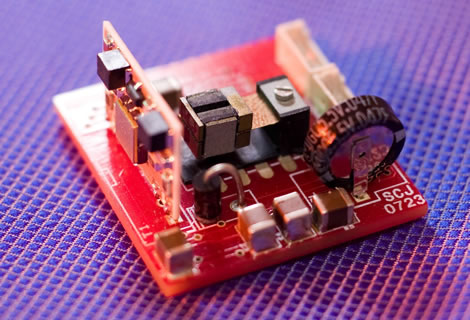
Southampton is internationally recognised as a centre of excellence in the development of energy harvesting devices. The University’s pioneering research has had a significant impact on the economy, public policy and international standards.

Read more
Applications of agent technology

Applications of agent technology

Southampton research into agent-based computing is having an impact on the defence, aerospace and civil contingency industries. The work is also being used in the environmental monitoring of climate change.

Read more
Intelligent energy management

Intelligent energy management

Pioneering research at Southampton is leading the way in the battle to reduce the impact of greenhouse gas emissions on our environment. Key tools for energy management are being developed that allow energy to be used more effectively.

Read more
Open access and digital archiving

Open access and digital archiving

Southampton’s research into free and open access has improved the way findings are communicated. It has directly influenced UK public policy debates, had an impact on the economy and led to the development of digital archiving techniques.

Read more
Web science discussion

Web science: developing a Web fit for the future

Southampton’s pioneering research not only played a significant part in creating the Web but is also still at the forefront of its development to ensure it continues growing to meet the demands of billions of people around the globe.

Read more
Pylons

Reliable cable systems for energy security

Researchers in Electronics and Computer Science (ECS) at the University of Southampton are working with major industrial partners to develop revolutionary new high voltage cables that can meet the demands of future energy needs.

Read more
Leading the open data revolution

Leading the open data revolution

Research at Southampton is placing the UK at the forefront of the global data revolution. Opening up data has lowered barriers to data access, increased government transparency and delivered significant economic, social and environmental impact.

Read more

Women in STEM

PhD student Olivia gives advice to female students thinking about going into Science, Technology, Engineering and Maths and talks about her experience at ECS

Key facts: Research Excellence Framework 2021

Top 5% in the UK for quality (GPA) and power in engineering.

96% of our research outputs rated as world-leading or internationally excellent in engineering and 95% for computer science.

100% of our Computer Science research impact is recognised as world-leading.

100% of our environment for research is recognised as world-leading for computer science.

OPTO6012 Project

Module Overview

The topics of research projects will cover different concepts in photonic materials and in design, fabrication and testing of device-oriented applications in photonic technology.

Each student will work under a supervision of a senior research/academic staff member. A project will start with a meeting between a student and a supervisor, where technical goals, a workplan and the schedule of work will be agreed. This plan will be written up by a student, checked by his/her supervisor and then submitted for approval to the Project Course coordinator.

Weekly meetings will then take place throughout the project duration with a supervisor or, if a supervisor is unavailable, a delegated deputy. The Project coordinator will need to be notified about such arrangements and know the names of those temporary deputies. Following the research part of the project, a report will be written up by a student that will cover both the results achieved as well as covering in-depth their relevant physics and engineering background.

The students should aim to complete all research and data analysis by the end of August to allow sufficient time for writing up reports. The deadline for submitting the reports is the end of September. In case of late submission, the standard, University approved penalties will apply, except for well justified cases. Any such extensions have to be requested in advance and in writing to the Project Module coordinators.

A part of the project is the “industrial showcase” which involves interaction with the relevant industry (photonic technologies) giving a flavour of the business aspect of the technology to the students. The students learn how to conduct a SWOT analysis to evaluate the performance of a business and are asked to write a short essay. The industrial showcase takes place during the Easter holiday and includes a full week of interacting with local industry. The assignment should be completed within 15 days after showcase week.

The aims of this module are:

develop advanced practical skills and enhance in-depth understanding of relevant background knowledge and in a chosen specialist subject embed the correct approach and methodology for independent work carried out in a research-led environment, and in particular within the cleanrooms and optical labs of the ORC  Train in technical and hands-on research skills to gain technical insight into concepts covered during taught courses to prepare for a career in research and development. Finally, introduces the students to the business aspect of research.

Aims & Objectives

Aims

Knowledge and Understanding

Having successfully completed this module, you will be able to demonstrate knowledge and understanding of:

  • A1 Important scientific and technological principles relevant to a chosen topic of a project
  • A2 use and applications of specialist tools, equipment and techniques used to design, fabricate, test or characterise the materials or devices developed in a project.
  • A3. The basic principles of operation of the components used, both in terms of the scientific as well as the technical background
  • A4 Current state of the art, including the research advances as well as in device or fabrication capabilities, relevant to a scope of a project.

Subject Specific Intellectual

Having successfully completed this module, you will be able to:

  • B1 have confidence and practice in gaining new knowledge and understanding through critical reading of research resources such as scientific papers or books
  • B2 discuss their results, review methods used, draw conclusions and plan future work
  • B3 apply the newly acquired knowledge to solving specialist design or characterisation problems
  • B4 Demonstrate the ability to assess and discuss the research part of the project to evaluate the viability of potential new devices and therefore learning to encompass the principle of concept to device.

Transferable and Generic

Having successfully completed this module, you will be able to:

  • D1 Experienced in a range of practical and experimental lab-based skills
  • D2 Present specialist technical information in written and verbal forms
  • D3 Able to work independently on a significant research project
  • D4 Able to defend the results and the report in front of senior scientists who will explore both the fundamental and practical understanding as well as abilities.

Subject Specific Practical

Having successfully completed this module, you will be able to:

  • C1 Operate and control specialist tools and processes with the cleanroom environment
  • C2 Fabricate photonic devices with due care paid to health and safety and current operating procedures relevant to a cleanroom environment
  • C3 Write a project dissertation that will provide a coherent, logical and accurate description of the work carried out and capturing the most important achievements of the project.

Syllabus

The topic or topics covered will be agreed by negotiation between a student and a supervisor who is allocated to support each project.

Learning & Teaching

Learning & teaching methods

ActivityDescriptionHours
Project supervision20
Demonstration or Examples SessionIntroduction to the Project, and lab induction10

Assessment

Assessment methods

MethodHoursPercentage contribution
Dissertation (final)-55%
Report (mid term)-18%
Presentation-18%
Assignment-9%

Referral Method: By set coursework assignment(s)

Share this module FacebookTwitterWeibo

Pages